
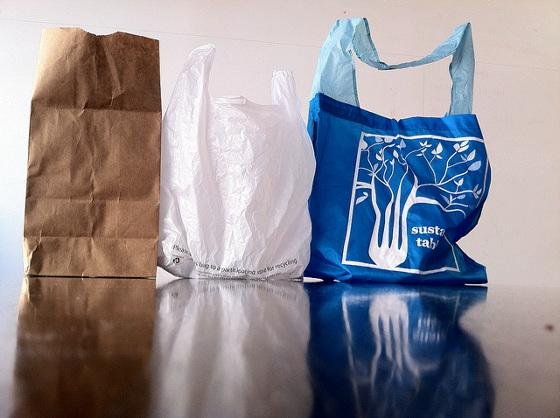
Plastic vs paper shopping bags is an important comparison for restaurants, convenience stores, grocery stores, bakeries, cafés, and other businesses that regularly package customer purchases. The right bag needs to do more than carry products. Businesses must consider durability, storage space, cost, customer convenience, the type of products being packaged, and applicable local rules.
Both paper and plastic bags have advantages depending on how they are used. Understanding the differences can help you choose the most practical option for your business.
Plastic vs Paper Shopping Bags: Key Differences
Before ordering bags in bulk, consider how customers use them and what products your business typically packages.
Here are five important differences between plastic and paper shopping bags.
1. Durability
Durability is one of the biggest factors when choosing shopping bags.
Plastic bags can be lightweight while offering resistance to moisture, making certain types useful for carrying products where spills or wet conditions may be a concern.
Paper bags can also be strong, particularly heavier-duty options with reinforced handles. However, paper can lose strength when exposed to significant moisture.
The best choice depends on what your customers are carrying and the conditions the bag is likely to encounter.
2. Types of Products Being Carried
Different businesses have different packaging requirements.
Paper bags are commonly used by businesses such as:
- Bakeries
- Cafés
- Restaurants
- Clothing stores
- Gift shops
- Specialty retailers
They can provide a clean, structured way to package takeout orders and retail purchases.
Where legally permitted, certain plastic bags may be suitable for applications where moisture resistance or flexibility is important.
Businesses should select bags based on the weight, size, temperature, and type of products customers typically purchase.
3. Storage Space
When comparing plastic vs paper shopping bags, storage is particularly important for small restaurants and retailers.
Bags are products businesses may purchase by the case, meaning even a small difference in packaging size can affect how much storage space is required.
Many lightweight bags can be stored compactly. Paper bags, especially larger handled varieties, may require more shelf or storage-room space.
Before buying wholesale quantities, consider how many bags your business uses and where the additional inventory will be stored.
4. Cost
Cost is another important consideration when comparing plastic vs paper shopping bags.
Rather than looking only at the price of an individual case, businesses should calculate the cost per bag.
For example:
Case price ÷ number of bags = cost per bag
You should also consider whether a particular bag is suitable for your products. A cheaper bag isn’t necessarily better value if employees need to double-bag heavier orders or if the bag isn’t suitable for its intended use.
Compare price, quantity, durability, and practical performance before choosing an option.
5. Customer Experience
When choosing between plastic vs paper shopping bags, customer experience should also be considered.
A bag that is easy to carry and appropriately sized can make takeout orders and retail purchases more convenient.
Consider features such as:
- Handles
- Bag dimensions
- Bottom width
- Carrying capacity
- Material
- Appearance
- Ease of packing
For restaurants, bags should also accommodate the size and shape of the takeout containers used by the business.
Paper Bags for Restaurants and Takeout
Paper bags are commonly used for restaurant takeout orders because they can accommodate different types of food packaging.
Restaurants may use them for:
- Takeout containers
- Bakery products
- Sandwiches
- Packaged meals
- Napkins and cutlery
- Smaller beverage orders
Different bag sizes allow restaurants to match the packaging to the order instead of using an unnecessarily large bag for every customer.
For larger orders, restaurants should consider stronger bags with appropriate handles or reinforced construction.
What About Plastic Bags?
Businesses need to be particularly careful when purchasing plastic shopping bags because regulations can restrict which products may be sold or distributed.
In Canada, federal regulations prohibit several categories of single-use plastics, including certain single-use plastic checkout bags. Businesses should therefore verify that any plastic bag they purchase and distribute complies with current federal, provincial, and municipal requirements.
The term “plastic bag” can cover many different products and applications, so businesses shouldn’t assume that every plastic bag is permitted simply because a supplier carries it.
Environmental Considerations
Environmental impact is more complicated than simply saying that one material is always better than another.
Factors such as:
- Raw materials
- Manufacturing
- Transportation
- Bag weight
- Reuse
- Disposal
- Recycling or composting availability
can all influence a bag’s overall environmental impact.
Businesses looking to reduce unnecessary packaging can focus on choosing appropriately sized bags, avoiding excessive bagging, and encouraging reuse where practical.
Should Your Business Use Paper or Plastic Bags?
Choosing between plastic vs paper shopping bags depends on your products, customers, storage needs, budget, and local regulations.
Paper bags can be a practical choice for many restaurants, bakeries, cafés, retailers, and takeout businesses. They come in different sizes and styles and can accommodate a wide variety of products.
Where a plastic bag product is legally permitted, its durability and moisture resistance may make it useful for certain applications.
Some businesses may also use reusable bags or other packaging options depending on their products and customer needs.
Why Buy Shopping Bags Wholesale?
Comparing plastic vs paper shopping bags should also consider how frequently each type needs to be reordered. Businesses that use bags every day can quickly go through large quantities.
Buying shopping bags wholesale can help businesses:
- Maintain consistent inventory
- Reduce frequent restocking
- Prepare for busy periods
- Purchase different sizes together
- Better manage cost per unit
- Keep packaging readily available
Tracking weekly or monthly usage can help determine the appropriate quantity to order.
Don’t Forget Other Takeout Packaging
Shopping bags are only one part of a restaurant’s packaging inventory.
Foodservice businesses may also need:
- Takeout containers
- Paper bags
- Pizza boxes
- Portion cups
- Beverage cups
- Cup lids
- Napkins
- Disposable cutlery
- Food trays
- Other packaging accessories
Purchasing several categories from the same wholesale supplier can make regular restocking easier.
Why Choose NStar Cash & Carry?
NStar Cash & Carry supplies packaging and everyday business essentials to restaurants, cafés, bakeries, convenience stores, retailers, food trucks, caterers, and other businesses across Toronto and the Greater Toronto Area.
Businesses can find products across categories including:
- Shopping and takeout bags
- Food packaging
- Disposable products
- Restaurant supplies
- Grocery products
- Beverage supplies
- Commercial cleaning products
- Janitorial supplies
Buying commonly used supplies in wholesale quantities can help businesses stay prepared while simplifying purchasing.
Choose the Right Bags for Your Business
When comparing plastic vs paper shopping bags, there isn’t one option that’s automatically best for every business.
Paper bags can be well suited to takeout, bakery, café, and retail applications, while legally permitted plastic bag products may provide useful durability or moisture resistance for certain purposes. Cost, storage, product weight, customer convenience, and applicable regulations should all be considered before purchasing.
By selecting bags that match your products and ordering frequently used packaging in appropriate quantities, your business can create a more efficient packaging system while providing customers with a convenient way to carry their purchases.